
Ocala National Forest
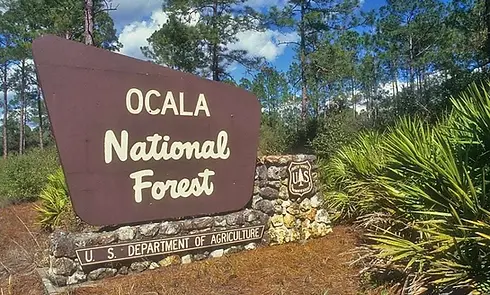
Planting in this forest.
The Ocala National Forest, nestled in central Florida, is a unique ecological haven spanning approximately 387,000 acres. Renowned as the southernmost national forest in the United States, it features an extraordinary mix of ecosystems, including longleaf pine forests, scrublands, cypress swamps, and crystal-clear springs. Home to an array of native wildlife, the forest supports species such as black bears, bobcats, gopher tortoises, red-cockaded woodpeckers, and eastern indigo snakes. Its waters, including Juniper Springs and Silver Glen Springs, provide important aquatic habitat and recreational opportunities for visitors from around the world.
The forest occupies a distinctive ecological setting where deep sandy soils and rolling uplands sit directly above the Floridan Aquifer, one of the most productive groundwater systems in the United States. These sandy upland environments support Florida’s characteristic sandhill ecosystems, which historically were dominated by longleaf pine and maintained by frequent natural fire.
In recent years, the forest has undertaken significant reforestation efforts aimed at restoring these iconic longleaf pine ecosystems. Longleaf systems once covered much of the southeastern United States but declined dramatically due to logging, land use changes, and fire suppression. Recognizing the ecological importance of this keystone species, restoration initiatives such as the Ocala Longleaf Restoration Project have focused on reintroducing longleaf pine (Pinus palustris) in areas where natural regeneration has been limited.
Restoration work includes site preparation, invasive vegetation control, and prescribed fire management, which help create suitable conditions for longleaf seedlings to establish and for native plant communities to recover. These efforts support the open canopy and diverse groundcover that define healthy longleaf sandhill ecosystems.
The ecological benefits of this restoration are substantial. Longleaf pine habitats support a wide variety of species adapted to fire-maintained landscapes, including the gopher tortoise, whose burrows provide shelter for hundreds of other animals, as well as the endangered red-cockaded woodpecker and the eastern indigo snake. Reestablishing longleaf pine also stabilizes fragile sandy soils and improves the health of aquifer recharge landscapes.
Beyond ecological restoration, these efforts enhance the recreational value of the Ocala National Forest. Visitors can experience hiking, wildlife observation, and exploration through recovering longleaf habitats, while the forest’s renowned springs offer opportunities for swimming, paddling, and outdoor recreation.
Through ongoing longleaf restoration efforts, the Ocala National Forest is helping rebuild one of the Southeast’s most biodiverse ecosystems while strengthening watershed health and long-term forest resilience for future generations.


Location
Florida, USA
Project Type
Reforestation
Environmental Benefits
Habitat Restoration
Soil Stabilization
Erosion Prevention
Watershed Restoration
Biodiversity Enhancement
Carbon Sequestration
About this forest
The Ocala National Forest, spanning 387,000 acres in central Florida, is a biodiverse landscape of longleaf pine forests, scrublands, and crystal-clear springs. It supports unique wildlife like black bears, gopher tortoises, and red-cockaded woodpeckers. Its pristine waters and fire-adapted ecosystems make it an ecological gem and a haven for recreation and conservation.


